The Mega Drive sound behind Kick or Treat: writing music for the Yamaha YM2612
Why Mega Drive music sounds the way it does, how the Yamaha YM2612 FM chip works, and how we wrote Kick or Treat's soundtrack for an emulated version of the same chip.
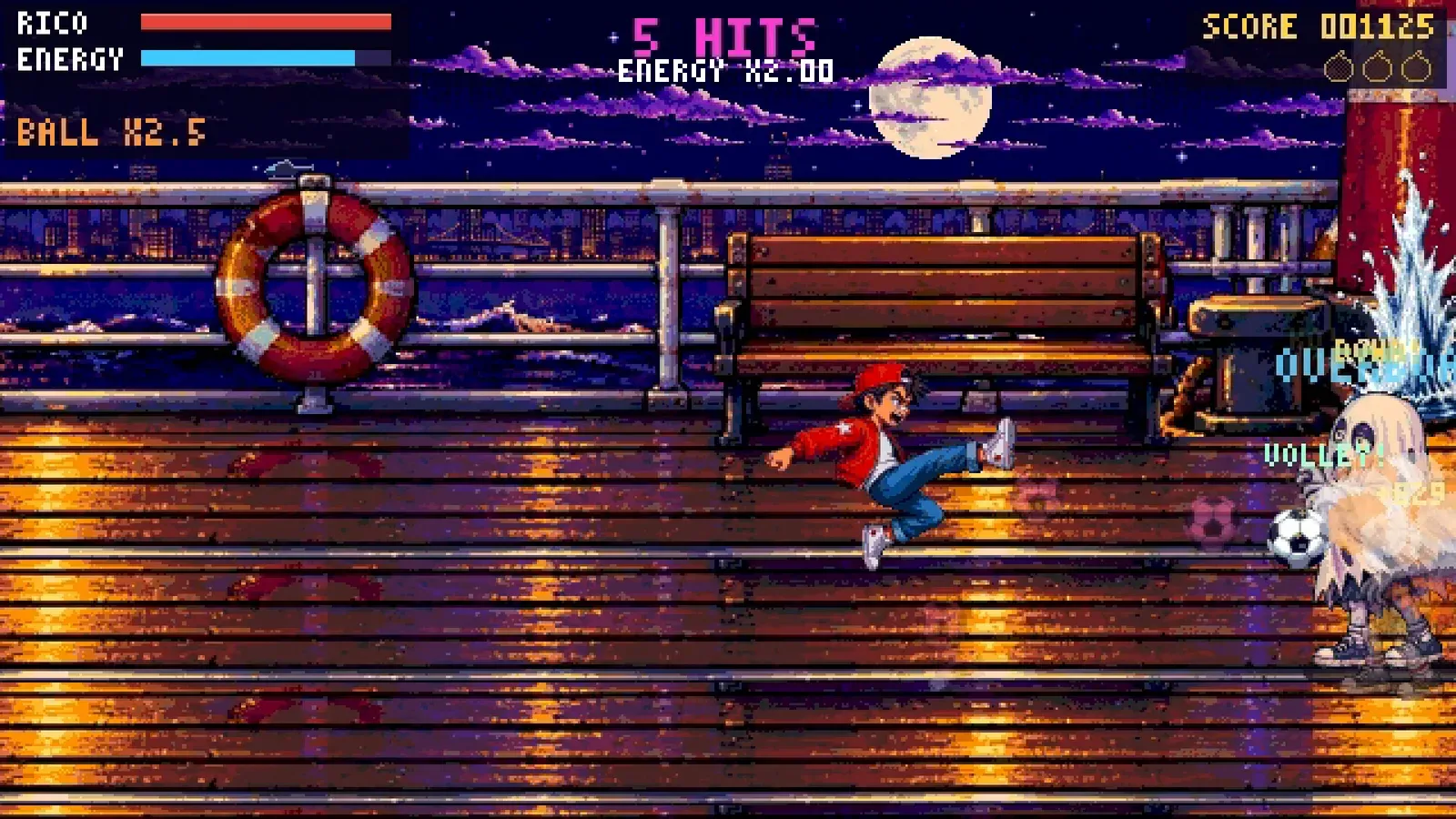
Play a few seconds of Streets of Rage 2 to anyone who owned a Mega Drive and watch their face. That slap bass, those sharp metallic leads, drums that sound a bit like someone hitting a biscuit tin.
That sound comes from one small chip: the Yamaha YM2612. When we made Kick or Treat, a Halloween beat ’em up in the spirit of the Mega Drive classics, we wanted its music to come from the same place.
Sonic’s music is recognised all over the world, and Sonic was the first classic game I showed my son. That sound, along with games like Alien Storm and Streets of Rage, takes me straight back to being a kid. I remember every note, and that unmistakable Mega Drive tone!
What’s inside a Mega Drive
The Mega Drive (sold as the Genesis in North America) came out in 1988 and had two sound chips working together:
- The Yamaha YM2612, an FM synthesiser with six channels. This is where the basses, leads, brass and bells come from. The sixth channel could also play short recorded samples, which is how most games got their drums and the odd voice shouting “GO!”.
- A PSG (programmable sound generator) with three square-wave channels and one noise channel. Simpler and buzzier, great for beeps, echoes and hi-hats.
That’s ten voices in total. Every Mega Drive soundtrack you remember fits inside those limits.
How FM synthesis works, without the maths
Most synthesisers start with a rich sound and carve it down. FM works the other way round. It starts with plain sine waves, the purest tone there is, and makes them wobble each other.
On the YM2612, each channel has four of these tones, called operators. One operator can shake the pitch of another hundreds of times a second. Shake it gently and you get a warm electric piano. Shake it hard and you get a growling bass or a bell that rings like metal. How the four are connected and how hard each one shakes the next is what makes an instrument.
That’s why Mega Drive music sounds so particular. The chip is great at punchy basses and glassy bells, and not very good at sounding like a real orchestra. The best composers of the time leaned into that instead of fighting it.
Our own Mega Drive studio
We didn’t want music that only sounded a bit retro. We wanted it to obey the same rules as the real chip: six FM channels, three square waves, one noise channel and one sample channel for drums.
So we built our own small studio for it. Each song is written as a score: the notes, the tempo and which instrument plays on which channel. The studio then plays that score through an emulation of the real chips. For the YM2612 it uses ymfm, Aaron Giles’s recreation of Yamaha’s FM chips, written for the MAME emulator, and a separate emulation of the Mega Drive’s PSG. The result is a sound file the game plays like any other music.
Every instrument in it was designed from scratch for Kick or Treat: 28 original FM and PSG patches, plus our own drum samples. We didn’t use a single sound taken from an existing game.
The tunes that work are the ones that stay in the background while you play and still end up stuck in your head. There’s no magic formula. You try, and try again, until something clicks.
The soundtrack, street by street
- Candy Corner Brawl, the first street. Slap bass, a sawtooth lead and brass stabs, the most Streets of Rage of them all.
- Tombstone Tiptoe, the park and cemetery. A walking slap bass with harpsichord, organ and a theremin-like lead for the spooky part.
- Neon Ghoul Avenue, downtown. Wah-wah chords and brass that call and answer each other.
- Lighthouse Lookout, the harbour. A concertina against brass, a foghorn, a buoy bell, and seagulls played on the PSG.
- Clocktower Countdown, City Hall. Clock bells and organ, with a nod back to the first street’s tune.
- Hollow King Showdown, the boss theme. A heavy riff and orchestra hits at 150 beats per minute.
- Principal Panic, the final chase. Fast, with a siren and bent orchestra hits.
- Treat Street Heroes, the credits, with a little theremin wink.
Sound effects too
Once the music was in, the old sound effects felt out of place, so we remade most of them on the same chip: kicks, candy pickups, jumps, menu sounds, the “street clear” jingle. We tried each one both ways and picked by ear. The chip won for anything that should sound like a game. A few physical sounds, like the ball bouncing and big crashes, stayed as more natural recordings because they simply felt better.
Listen for yourself
Kick or Treat is free on the App Store for iPhone and iPad, with no ads and no purchases, and the Android version is on its way. Turn the sound up on the first street.
If you want to know where the game’s ideas came from, read the beat ’em ups behind Kick or Treat.
We’d love to share the full soundtrack too. We’re working on it.